
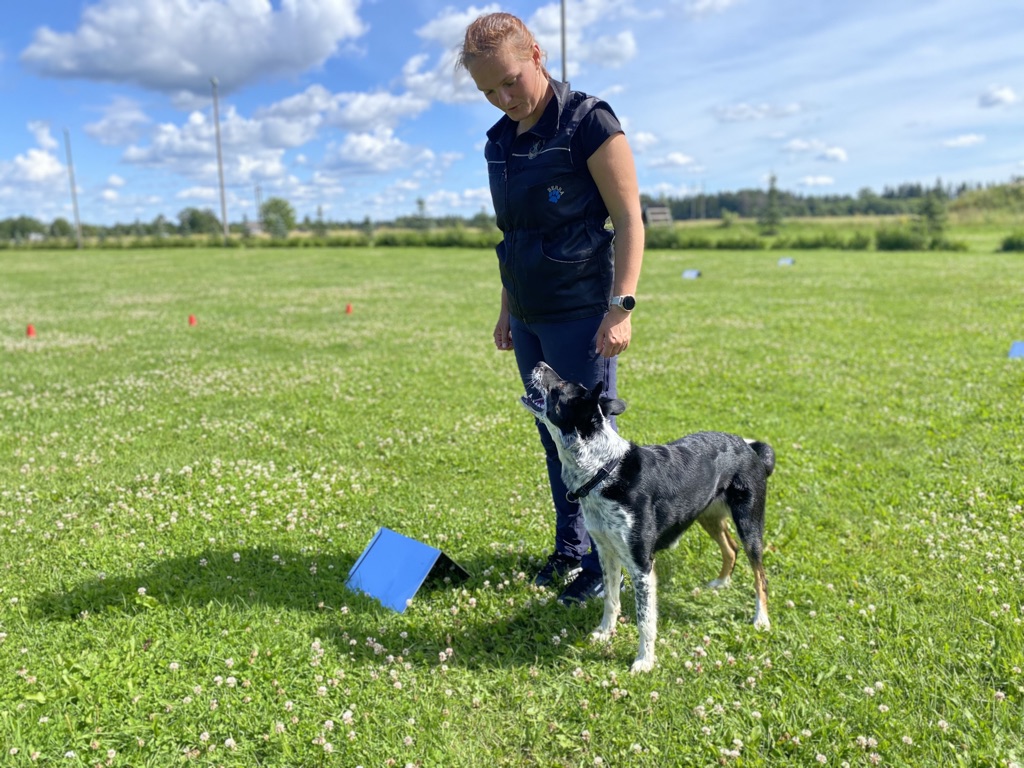
Basic position or heel position is the position where the dog is next to handler on left or right side. Traditionally, dogs are taught to sit in basic position, aligning themselves at the handler’s side. However, teaching dogs to stand in the basic position instead of sitting, offers some advantages. But it also comes with its challenges.
Why and when prefer stand
Dogs trained to sit in the basic position may default to sitting at inappropriate times, leading to errors. For example, performing stops with different positions, a dog that automatically sits might do so when the exercise requires standing. Some dogs are really quick in sitting, so they offer or try to the sit even when handler is little bit slowing down, like on turns. Teaching your dog to stand in the basic position helps reduce the likelihood of these unintentional mistakes.
Some dogs find standing in the basic position more natural than sitting, especially those with physical limitations or specific builds. For example, long-legged and deep-chested breeds or older dogs may find sitting uncomfortable or awkward. Training these dogs to stand instead can be more comfortable and less stressful on joints compared to repeated sitting and standing.
Teaching your dog to stand in the basic position can also enhance their body awareness and balance. Many exercises in rally obedience require precise positioning and posture, and standing encourages dogs to engage their muscles and remain attentive.
Why and when prefer sit
If dog, who is already trained to sit in the basic position during obedience training, is very good at it, retraining may not be reasonable. Shifting to a standing position requires retraining, new que and overcoming ingrained habits, which can take time and patience. If the dog is very focused and dedicated to work and doesn’t miss the commands, it doesn’t matter what is the basic position.
If you also participate in other obedience disciplines besides rally obedience, it is probably necessary for the basic position to be a sit. In that case, you can teach your dog a separate command for rally obedience basic position. However, this might not always be the most practical approach.
A dog in a standing position may be more prone to shifting or fidgeting, which can lead to point deductions. Training the dog to maintain a stable, focused stand requires consistent reinforcement and practice.

Standing in the basic position can be a game-changer for smoother transitions and fewer errors in rally obedience, especially for dogs who struggle with sitting. However, if your dog is already excelling with the traditional sit, sticking with it may be just fine. Consider your dog’s comfort, physical needs, and training goals to decide what works best for your team.
Whichever you choose, focus on clear communication and a strong bond with your dog—rally obedience is all about teamwork!
 KARIN LASSMANN
Lisa kommentaar